Energy Efficiency + Beneficial Electrification = Awesomeness
These days, I reckon, most small businesses are going to ask you to leave them a Google review. I'm going to get around to it one of these days. Just haven't made time yet.
But a few customers reached out recently, unsolicited, to share some feedback.
I’m telling you about it to brag, yes. But also I have to say it's so personally encouraging. The work we do at Green Projects Group is pretty niche and pretty customized. We do work across a few trades. Each trade can take a lifetime to learn. So I’m eager for positive feedback on my “recipe.”
We're taking an old practice (usually called "energy efficiency") and smashing it together with a new type of work (sometimes called "beneficial electrification"). Here’s the formula:
Energy Efficiency + Beneficial Electrification = Awesomeness
I didn’t invent this formula, but I owe it to my customers to be sure that it is indeed awesome.
Energy efficiency is simple: waste less, save money. Tried and true.
But the benefits are less clear with electrification, as in the case of replacing some gas heating with heat pump heating. Or as in the case of replacing a gas water heater with a heat pump water heater.
We are obsessed with electrification for a few reasons. At the core it's because we have to do this to avoid the worst impacts of climate change. But we are proceeding very carefully to ensure that it's, well, beneficial for customers. I spend a crazy amount of time doing energy audits and carefully detailing exactly how we're going to improve each and every home. I don't have a "one size fits all" formula.
So is it working? Enough with the intro. Some recent results...
Nichole had no AC and didn't even use a window AC. We installed a heat pump (which also cools in case you were unaware!) and a new furnace, along with insulation, both in the attic and basement. She wrote me in August:
"Also, fun fact, I just got the consumer’s statement for July 8-August 5, and we used 110 KWH Less electricity than the previous billing period, Even with AC! :D color me shocked."
She followed up in September:
"I just have to share. We used 234 KWH of electricity in August, compared to 512 KWH in August of 2025. 45.7% of previous usage. That's just bonkers.
Honestly I was pretty skeptical that it was going to save us money on utility bills since they weren't that high to begin with and we were adding AC, so I'm still blown away. There's no doubt the program is effective!"
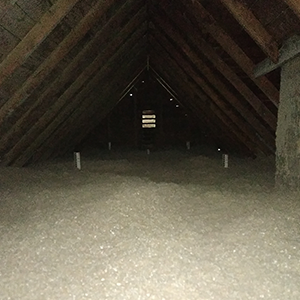
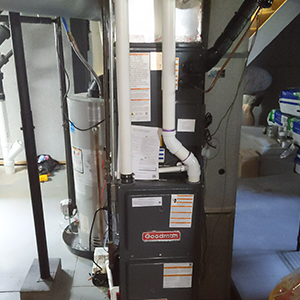
Project photos (below): Nichole's beautiful new furnace and heat pump, and a whole pile of insulation in the attic:
Alex also wrote me in September:
"The bottom line is that both the gas and the electricity use are down substantially compared to the same months last year (full April - full August). How much can be attributed to the heat pump, furnace, insulation improvements or other appliance changes (updated the 20 year old refrigerator and an electric stove to induction) is definitely hard to pinpoint. But if I had to guess, 85% is due to a heat pump."
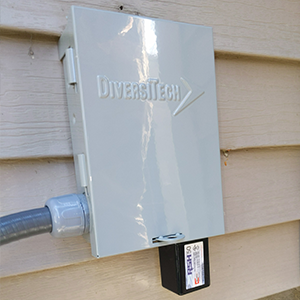
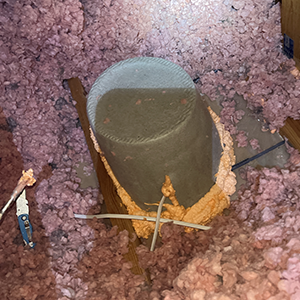
Project photos (below): A can light cover going in Alex's attic. And a lil' pro tip on installing a heat pump outdoor unit ("condensing unit")... See that little black tab on the disconnect switch? That's a surge protector. It could be the difference between a stray lightning strike you never remember and the lightning strike that costs you thousands of dollars to replace a wrecked condensing unit!
Tyler wrote me halfway through a very thorough insulation upgrade (we did both the attic and basement):
"I can’t believe the progress on our house so far! It is already CONSIDERABLY less musty, more fresh, and noticeably cooler in both the basement and the boy’s upstairs room—and there’s still more to do! I have really enjoyed working with Joel and bryan; their attention to detail is awesome and they are treating this project as if it were their own home."
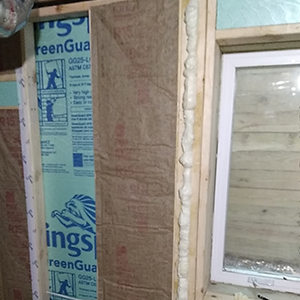
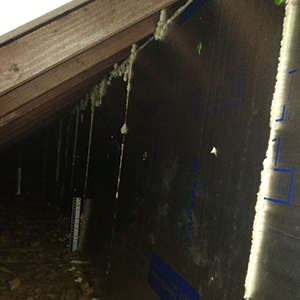
Project photos (below): Tyler's beautifully enclosed knee wall in the "Cape Cod" second story. Fiberglass works best when it's enclosed on all six sides. So we tacked up these polyisocyanurate sheets and foamed the seams. And in the basement you can see a robust insulation job: two inches of rigid foam behind a framed-out basement wall filled with fiberglass. We don't do this much basement insulation on every job, but it fit really well into Tyler's project!